
The Energy Challenge
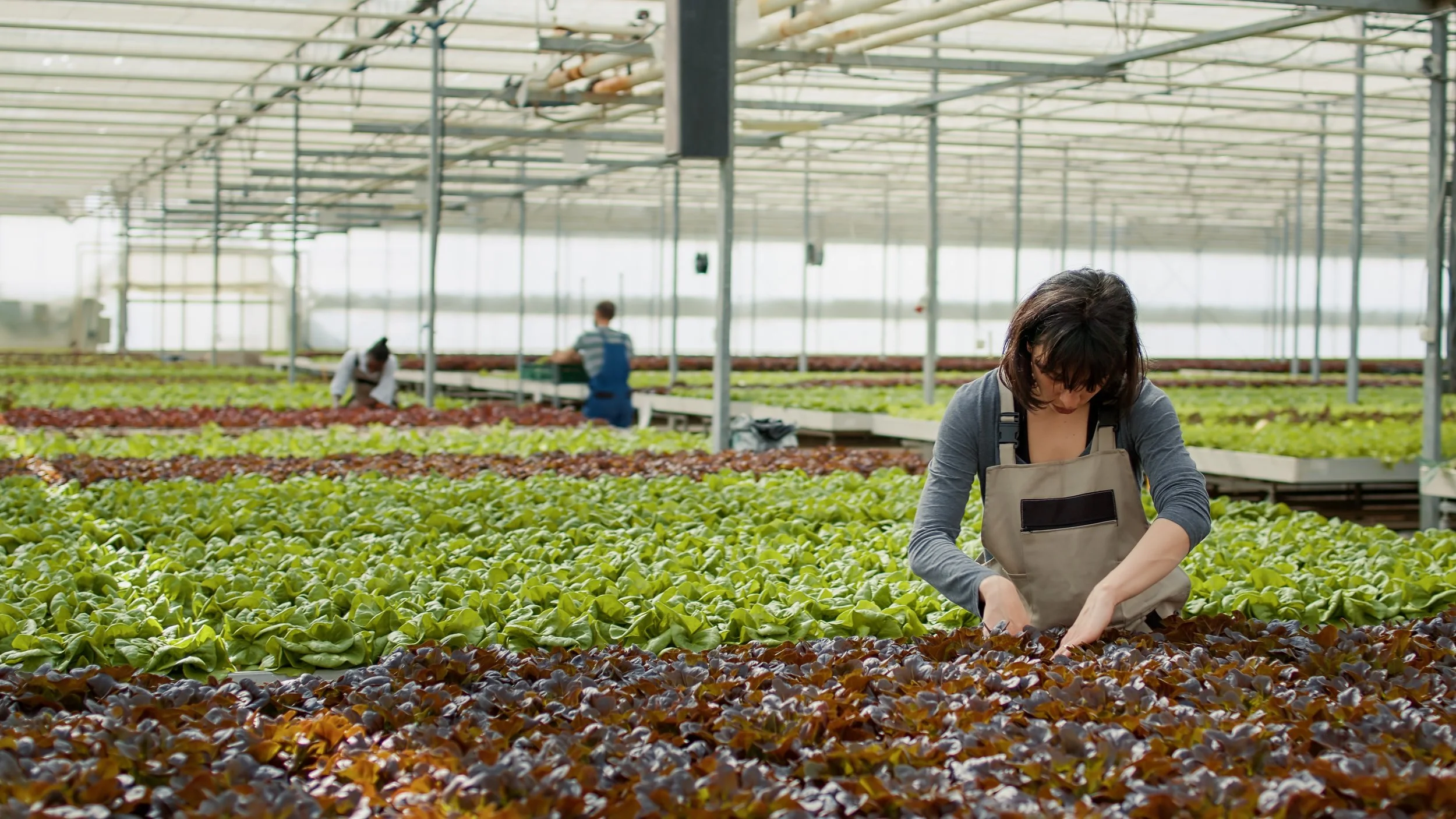
Energy is the second largest operating expense for greenhouses as it must support:
Heat in winter
Cooling in summer
Supplemental lighting
Humidity control
Computers, sensors
Fans, ventilation
Tanks, purification
Locker rooms, bathrooms
Simultaneously, American industry has transformed from physical production to digital production with data centers and power plants at the center – both of which create enormous amounts of heat. Rather than evaporate that heat into the atmosphere using millions of gallons of water, closed-loop radiator systems capture and divert it into greenhouses to help grow food and create local jobs.
Turning Waste Heat into Local Food
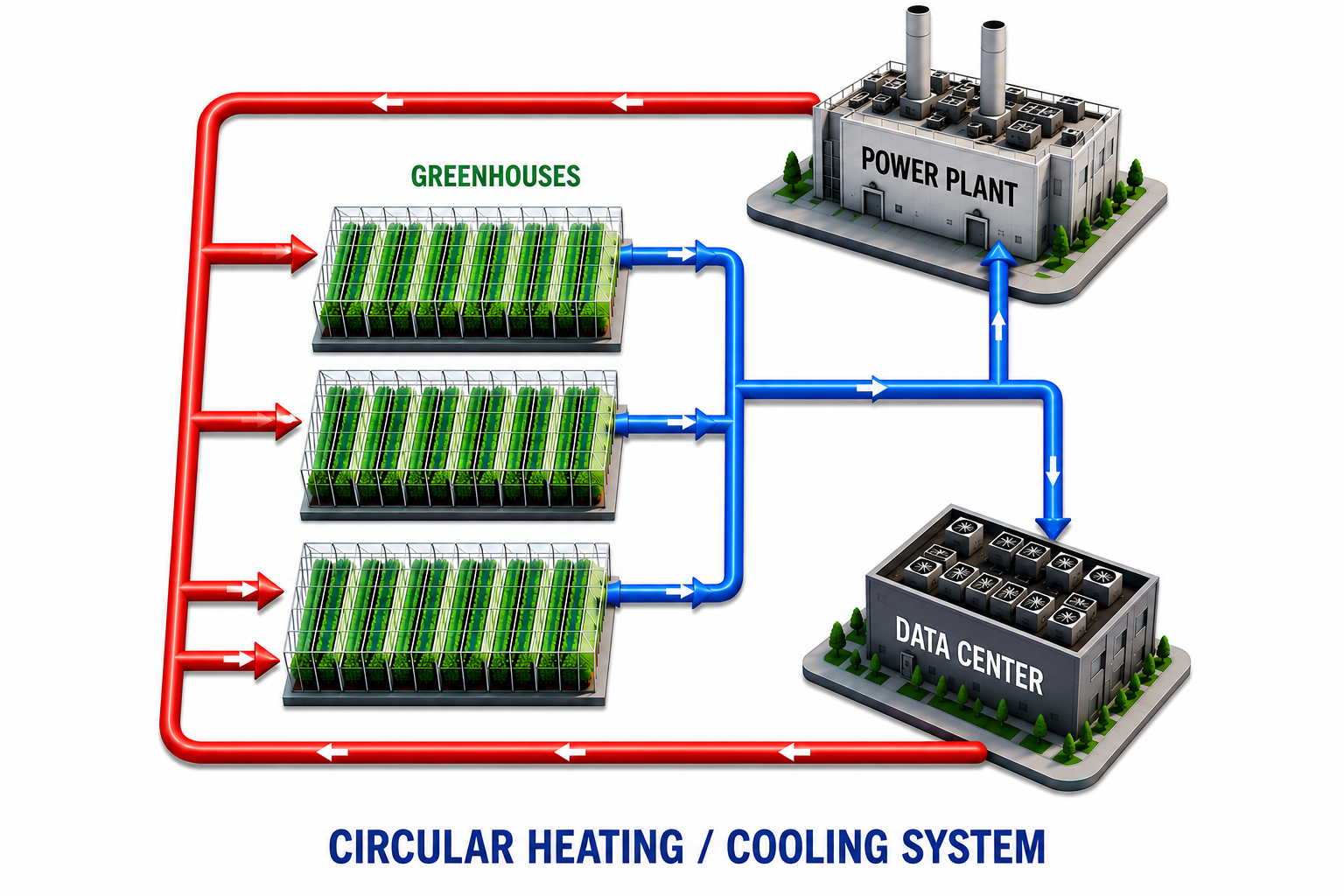
Closed-loop cooling systems keep power plants and data centers running efficiently. As the cold water absorbs heat, it becomes extremely hot and can be directed into the greenhouses to eliminate the need for boilers and gas. Free heat! As the water flows through the greenhouses, it cools off where it is then returned to the power plant and data centers.
Water Efficiency Matters!
Plants still need water – lots of it. Commercial greenhouses use 90% less water than open field farming because the water recirculates. With open field, 50% of the water evaporates while another 25% runs off. And only a portion of the absorbed water actually reaches the root systems. Recirculating systems ensure every drop of water is only used to nourish the crops.

The Future of Farming.
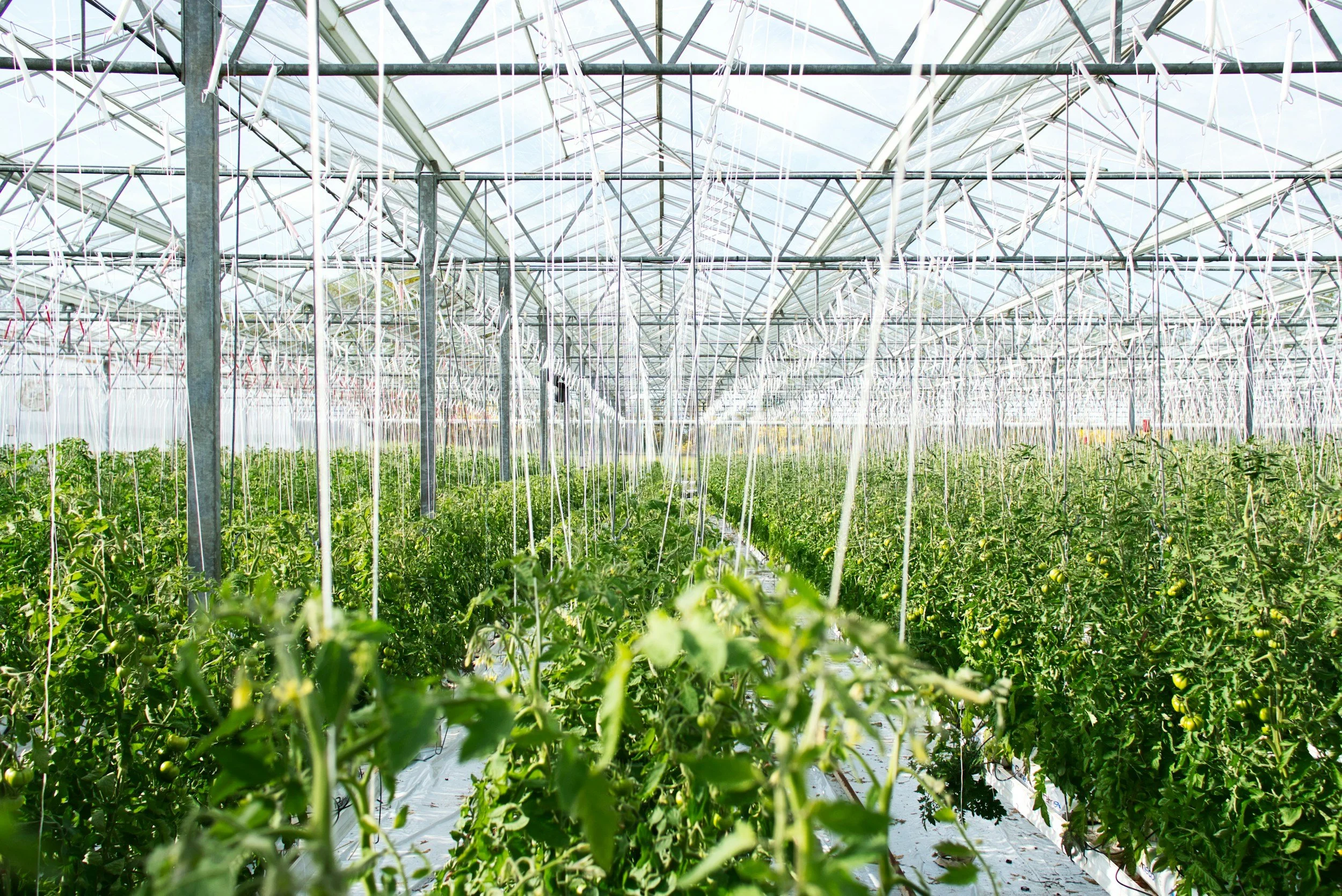
Agriculture
+ Energy
+ Computing
Greenhouses need:
Low-cost heat
Low-cost electricity
Committed buyers
Local distribution
Local employees
Data centers need:
Stable, abundant power
Cooling systems
Water management
Local approval
Power Plants need:
Long-term customers
Natural gas
Cooling systems
Government support
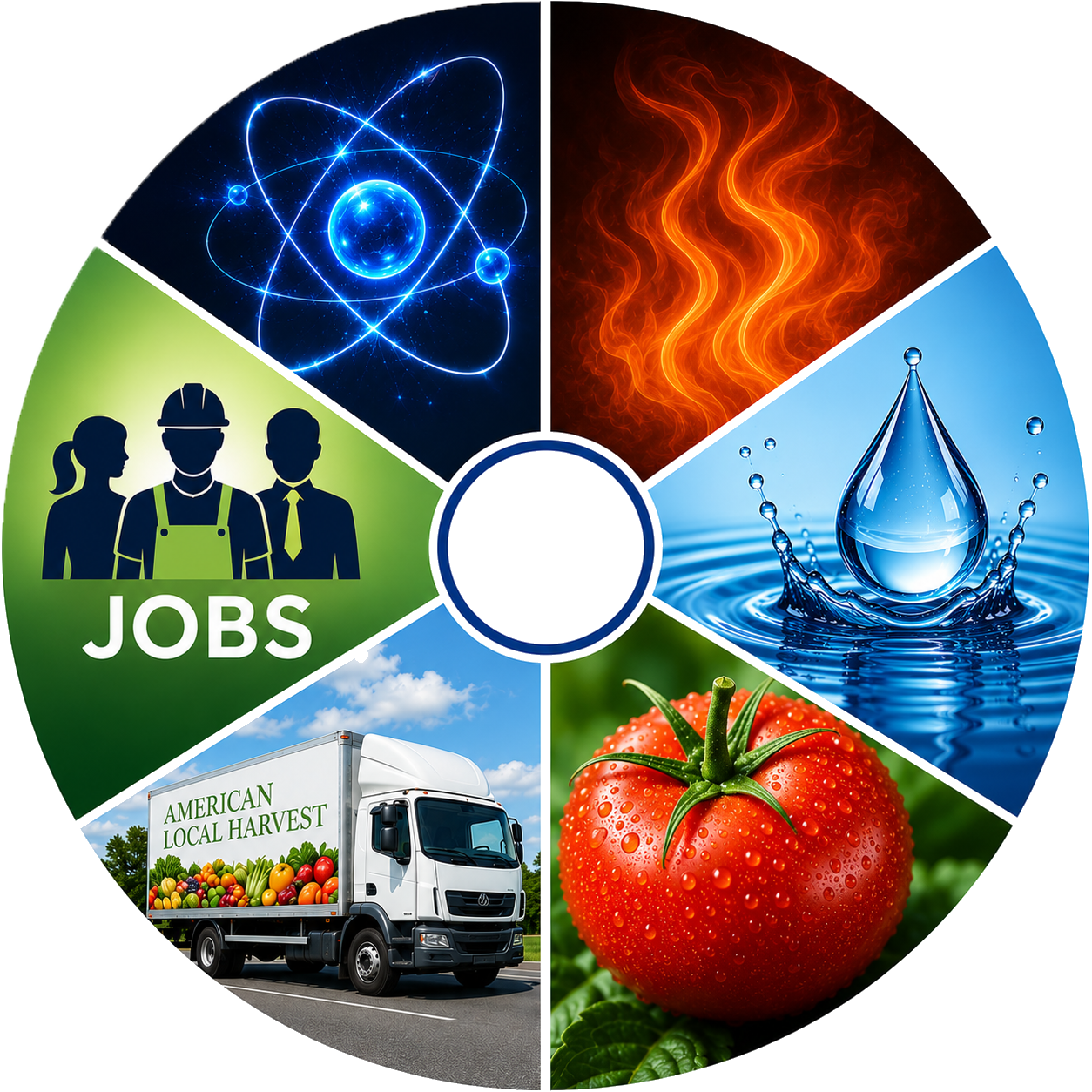
When designed together, these systems can share infrastructure, reduce waste, drive down cost, and create community opportunity.
Building the
Next Generation of American Agriculture
American Local Harvest supports:
Local jobs
Farmer partnerships
Commercial greenhouse development
Local food production
Local food distribution
Water efficiency
Sustainability
Energy integration strategies
Controlled Environment Agriculture education
Public-private infrastructure collaboration
Strong regional partnerships
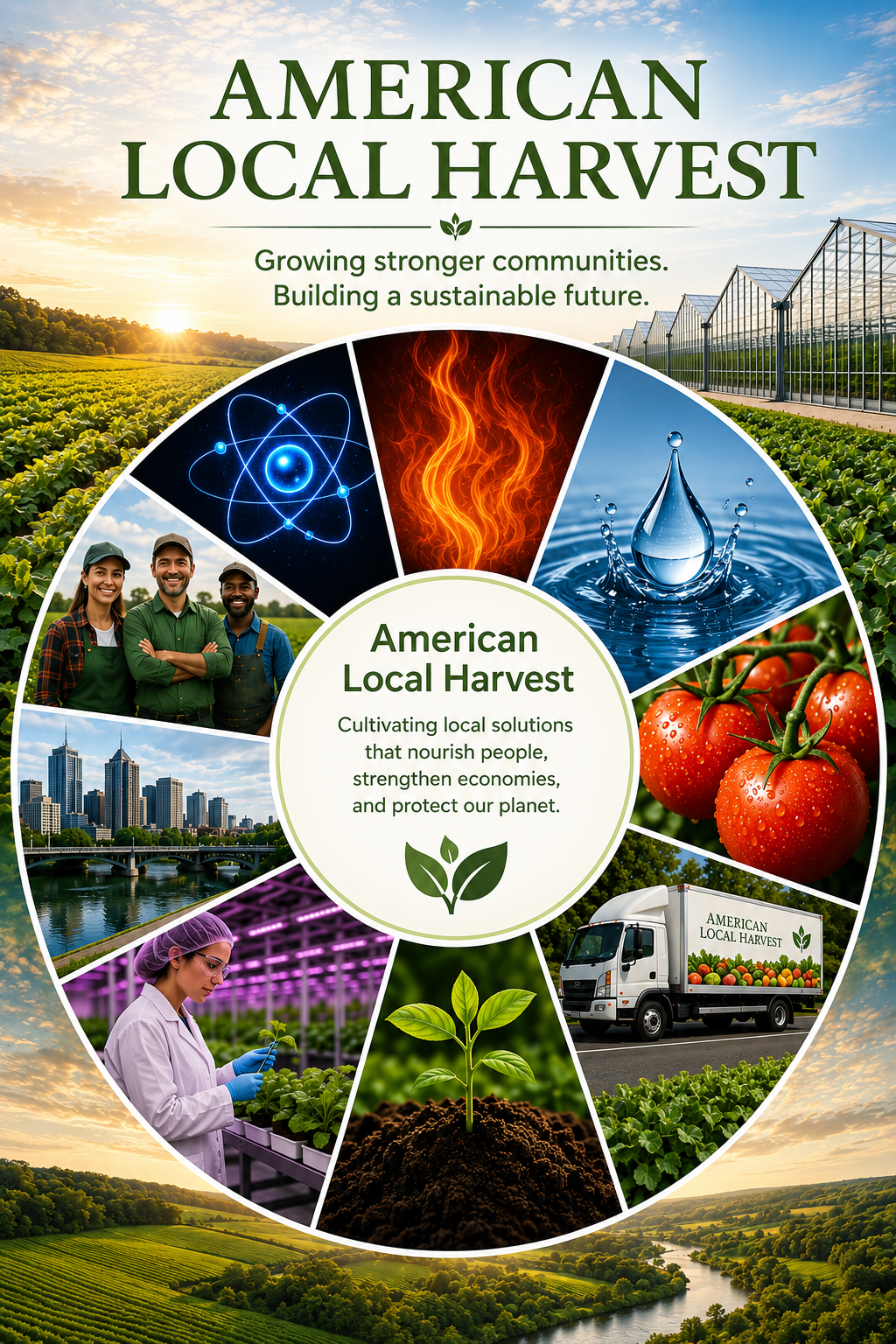
America needs more food, electricity, infrastructure efficiency, water conservation, jobs. American Local Harvest believes these goals can be achieved together. By aligning agriculture, energy, and computing infrastructure, we can rebuild modern industry and production systems that are stronger, cleaner, and more resilient.